
By Elea Jürß
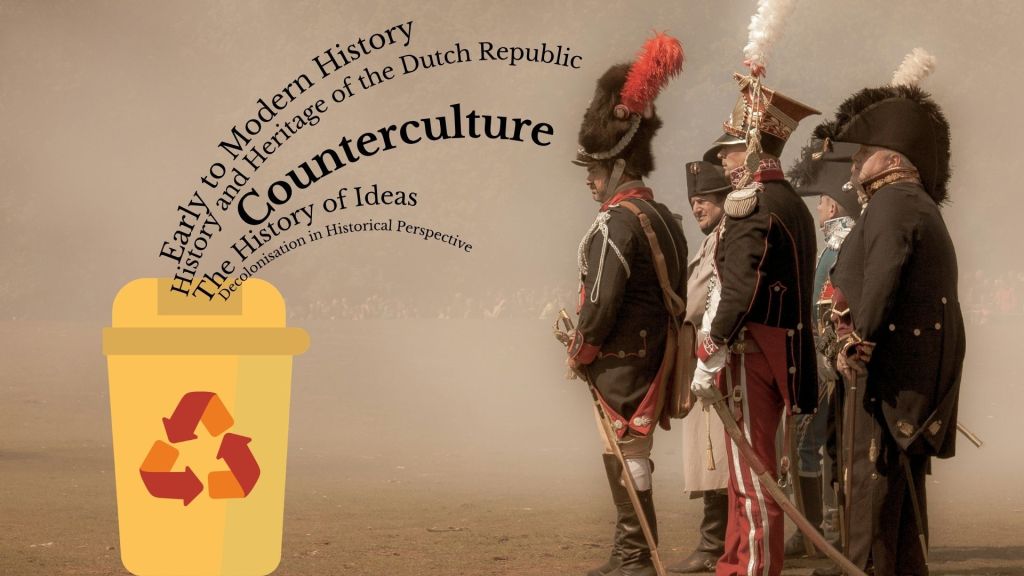
Undersubscription, cancelled courses, lack of historical methods, unfulfillable masters requirements. The AUC history track has been the site of constant complications, conflicts and complaints. Recently, after the cancellation of Counterculture, a petition signed over 70 times made its rounds through the AUC Community Group chats, and students’ upset has become glaringly obvious. Now the Faculty of Humanities has begun to overhaul the entire track.
Having had to cancel courses repeatedly due to undersubscription, a track revision seemed like an opportunity for change, explains Dr. Erinç Salor-Broberg, the Head of Studies Humanities. With no historians employed directly at AUC, the track analysis and development are assisted by the history department of the Vrije Universiteit (VU). This collaboration is meant to aid in transforming the current track into a direct pathway to a Master’s in History at the VU, ensuring that AUC students meet all necessary entry requirements.
Chasing a long term sustainable revitalisation of the track led to removing Counterculture, largely investigating the countercultures of the 1960s, crosslisted with the Culture track. Many students considered this course the “perfect embodiment of AUC’s values as an interdisciplinary institution” and its cancellation a “devaluation”, as stated in the header of the student petition asking AUC to reconsider retiring the popular course.
Salor-Broberg names concerns about balancing the capacity necessary to offer the course, relative to the number of Humanities students and other Humanities courses, as one of the reasons for its retirement. Here the number of past registrations is only a signal, but not a tangible indicator whether a course can be offered, even if it was subscribed well in the past. “It is never an easy or quick decision. I’ve been doing this for five years and every time I had to withdraw a course, it was always a gut wrenching conversation for me”, Salor-Broberg says.
Knowing the redesign was pending, Counterculture was removed in order to allow for more space to align the new courses with a larger vision developed in cooperation with the VU, to be able to invest into a more rigorous education for historians. “If we want to design a track that clicks together, it might sometimes be necessary to retire a course that was popular among students, but doesn’t fit” says Salor-Broberg, emphasising that this decision was made in close communication with all involved lecturers.
According to Salor-Broberg the entire revision will take place in two phases. Phase I primarily concerns the 100-Level courses. Both, A Golden Age? History and Heritage of the Dutch Republic and Early to Modern History have been replaced. Designed in cooperation with History Lab lecturer Dr. Jonathan Singerton, Introduction to History 1 will cover the foundations of what is associated with the discipline. “History can look like a lot of things, and we wanted a course that captures how broad, diverse, exciting and vibrant the discipline is,” says Salor-Broberg.
Dr. Marianne Ritsema van Eck, former lecturer of Early to Modern History developed Introduction to History 2, which will primarily focus on methods and case studies. The new introductory courses will not have to be taken in order, and alternatively to Methods in the Humanities 1, will form the entry requirements for all other history courses. While The History and Heritage of the Dutch Republic has been retired in order to make space for the new courses, the department is currently exploring ideas for a course connected to the historical resources Amsterdam offers to students to allow for a more practical approach.
Meanwhile, Phase II, concerning 200 and 300 level courses, is still largely a work in progress. For now, History Lab will remain as is. History of Ideas is set to be retired and replaced by a course titled History of Knowledge. The new format is meant to address different forms of historiography others courses currently don’t cover, including oral, ethnic and colonial histories. Students will be investigating the question of where knowledge comes from and who gets to claim it. Salor-Broberg hopes that this course in particular will be more attractive to non-Humanities students as well, and is planning a launch event in October if the course gets finalised. Additionally, the department is working on revitalising Global History, a field the VU specialises in as well.
“Anytime students have a reaction about anything we do, negative or positive, it is incredibly gratifying, because it shows that they care,” explains Salor-Broberg, hoping students will continue to reach out to staff with their concerns and worries. “We want to hear them […] and if they have anxieties about things being lost, or things being under threat, we share that anxiety,” the lecturer says, also in connection to rumors and concerns circulating about more and more Humanities courses being cut at AUC. The Head of Studies Humanities concludes that “it means everything to us that [students] choose to invest three years of their lives in our programme”.
 The Herring