
By Maheen Hasan
AUC students often pride themselves on progressivism, activism, and diversity. I remember how the word “inclusivity” was ingrained in every part of my orientation week. Yet, within my first week on campus, I had started to notice the gap between the image of inclusivity and the reality of everyday interactions.
Oftentimes, students around me have handed out comments framed in praise by telling me I do not look like my ethnicity, almost as though being mistaken for a lighter-skinned ethnicity was somehow flattering.
The first “compliments” came quickly. What they revealed instead was an unspoken hierarchy of what kinds of brownness are considered palatable.
Then there was the constant confusion. White students repeatedly mixed me up with the only other South Asian friend I had on campus. Apparently, two brown women in the same social circle were indistinguishable. I was also told, more than once, that I was “basically Indian,” as if the distinctions between histories, identities, and cultures across South Asia were irrelevant.
These things might seem small, but they reveal something much deeper about spaces like the AUC bubble that deem themselves as progressive. Activism is often a part of the brand of being at AUC, with students being passionate about discourse surrounding social justice. Yet, when you look at these spaces more carefully, you notice something is off. The friend groups and circles are overwhelmingly white, and their meetings are socially closed off, with their conversations about privilege and white dominance. Sometimes it feels like diversity functions less as a commitment and more as an aesthetic.
Our stories are welcome in discussions. Our identities appear in brochures and diversity statements. But in everyday campus life, the same barriers remain: who gets invited to things, who feels comfortable in certain spaces, who is assumed to belong.
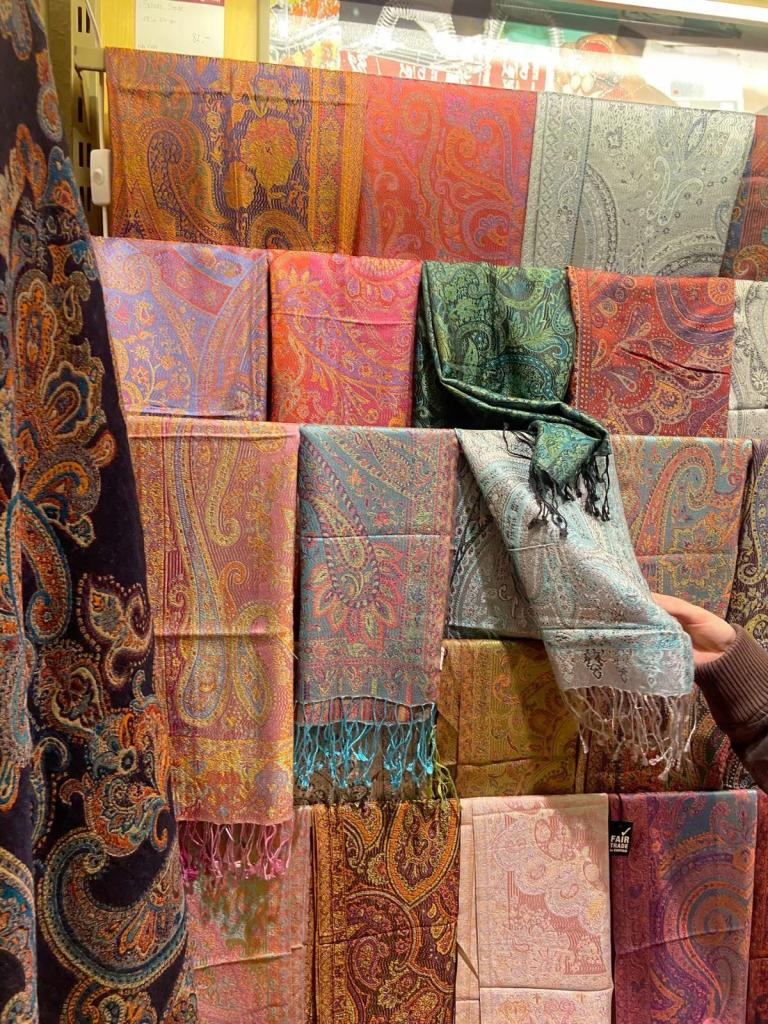
I have seen students adopt various parts of South Asian culture, especially cashmere shawls and jhumkas. On white skin, they somehow end up making them look more interesting, more liberal arts-que, yet when brown girls wear them, they do not fit in the same category. It creates a feeling that many students of colour recognise but struggle to articulate: the sense that parts of our culture are welcome, but we ourselves remain peripheral.
None of this means that every student here is insincere or that activism on campus is meaningless. Many people genuinely want to build a more equitable community. But intention alone does not create inclusion.
True solidarity requires more than aesthetic appreciation and social media advocacy. It requires uncomfortable reflection, genuine listening, and a willingness to examine how exclusion can exist even inside spaces that call themselves progressive.
 The Herring