
By Cadence Chua
This article is part of a series of portraits of graduating students.
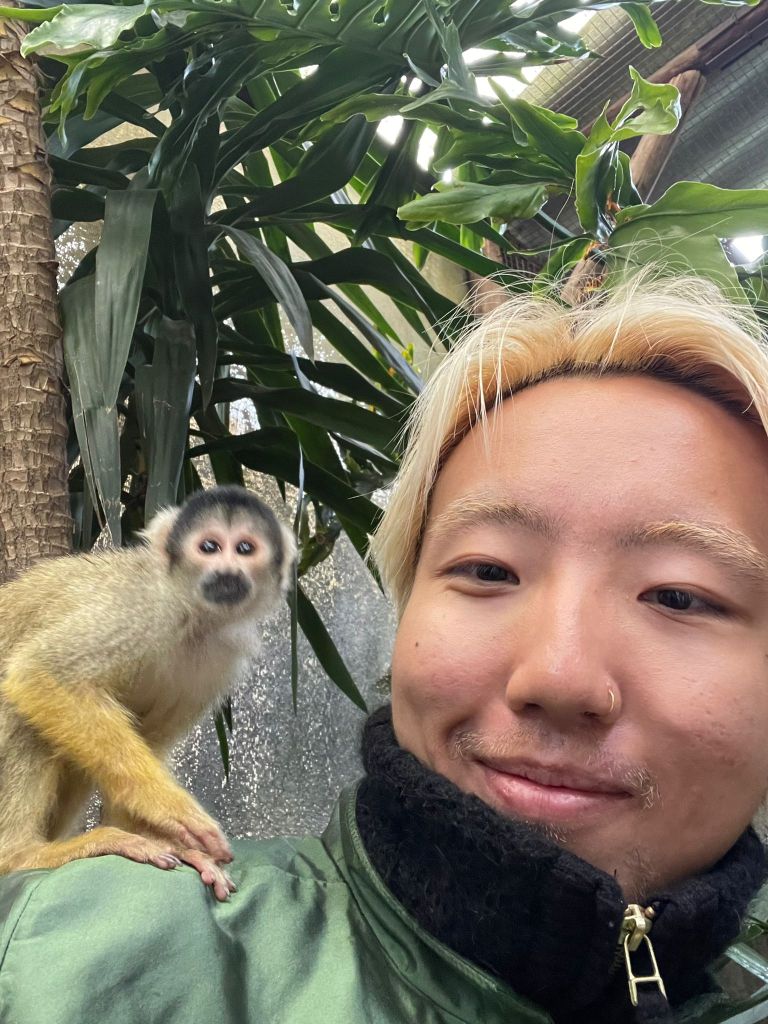
Eli Yang, a Humanities graduate, is a well-travelled person. While studying at AUC, his research interests brought him all around the world, from Reed College in the US to National Taiwan University. Now, after graduating from AUC in January this year, Yang is pursuing postgraduate courses at the University of Cape Town in South Africa, from where he speaks to The Herring through an online call.
Yang has an interesting academic background. After doing the Chinese Gaokao (national university entrance exams), he attended Sun Yat-sen University in Guangzhou for two years before transferring to AUC. When asked why, he says that it was an “overwhelming period” in China due to the COVID-19 pandemic, and that it made him think about the differences between China and Western countries when it comes to managing the crisis. “At that time, a lot of people were discussing how the COVID policy in the West was more democratic, and I was thinking: okay, if you say Chinese policy isn’t as good, I would like to see what it’s like elsewhere,” the graduate explains.
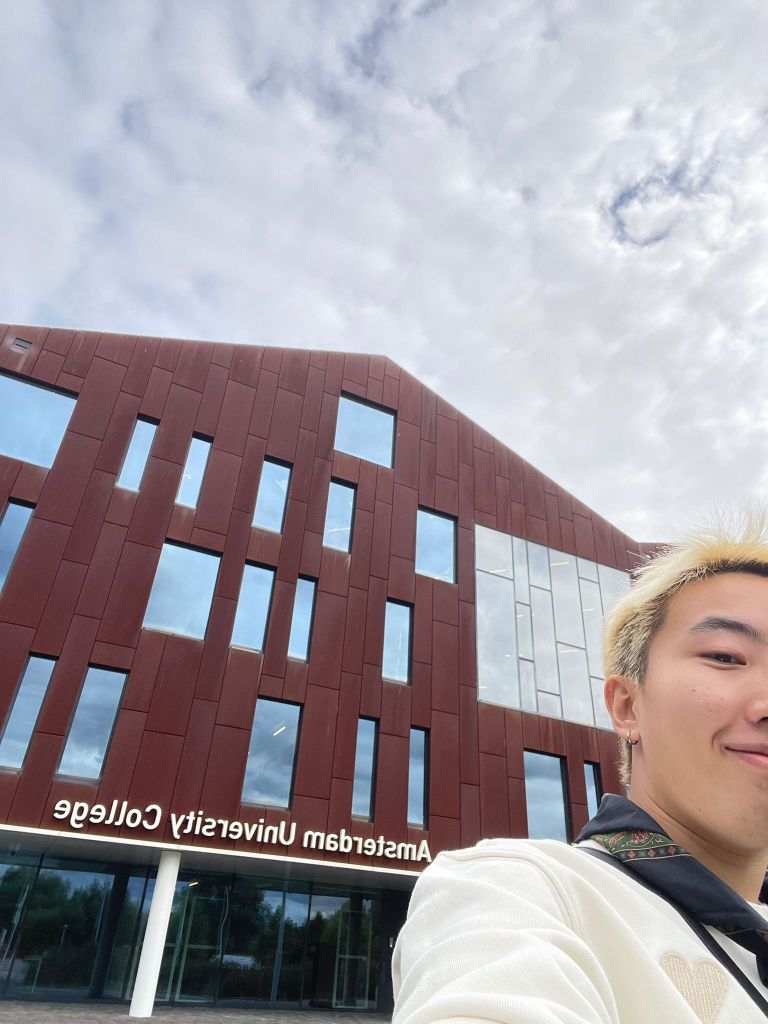
After spending a year at AUC focusing on philosophy and religion, Yang did an exchange semester at Reed College. Following the experience, he decided to conduct independent research at National Taiwan University, before going back to AUC to complete his bachelor’s degree. After his current self-arranged semester in Cape Town, he will be headed to Harvard Divinity School on a full-ride scholarship to pursue a Master’s degree in Theological Studies.
The prolific researcher tells The Herring that he is currently focusing on “religious extremism and subaltern studies”, specifically on “how people’s agency is mediated by different institutions, be they religious power, secular power, or the government, and how these agencies are mediated and can exist in a template”. Yang’s AUC capstone was on Buddhist self-immolation (the practice of setting oneself on fire) and why most self-immolators are under the age of 25. He says that this particularity has “never been problematised”.
Now, Yang is taking postgraduate courses including African Religion and Culture, African Ethnographic Writings, Rethinking African Studies, Rethinking the Development of Africa, and African Public Policies. He is also learning Spanish. “I had a very cool professor at AUC, Dr. Dion Forster, who was from South Africa. He recommended [visiting the country] in class a lot. It made me really attracted to this place, so I went,” Yang recounts.
Yang’s spontaneity is apparent in his academic career. Harvard Divinity School’s master’s programme was the only programme he applied to. As for how he got admitted, he says earnestly, “Although it sounds like it, it’s not flattery. AUC did give me a lot of opportunities.” He points to his exchange semester in Reed College as an example. “Reed College is a very elite and expensive school. Without AUC, I wouldn’t be able to go there, by any chance. Tuition there is around $70,000 a year.”
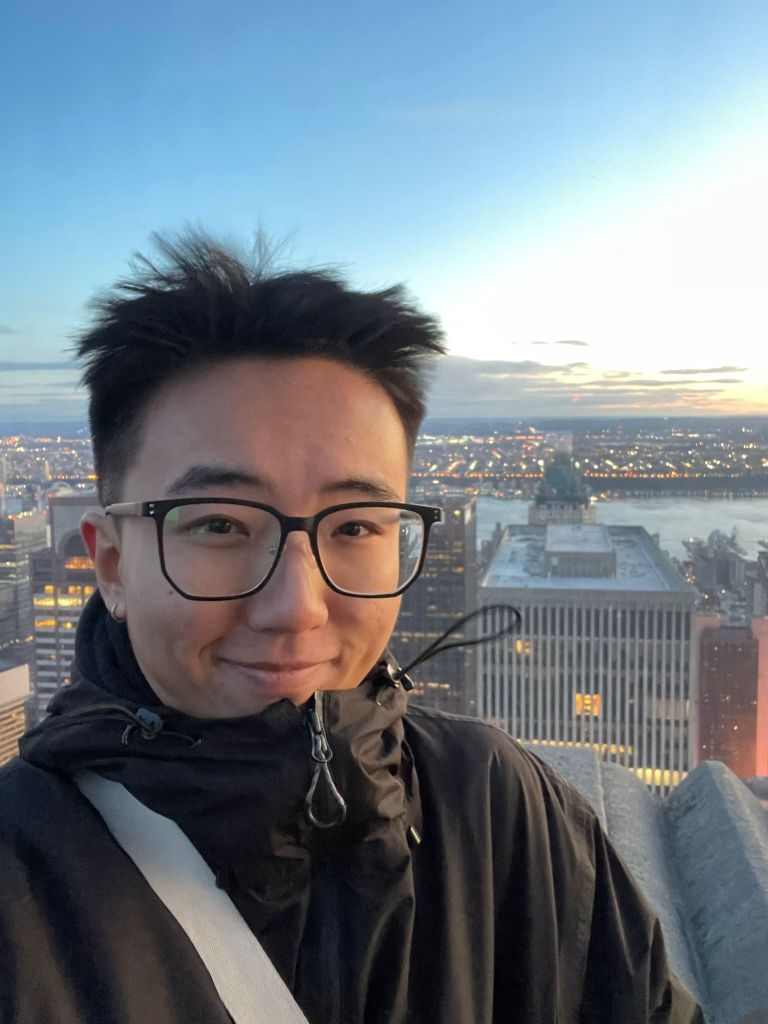
Regarding his Reed experience, Yang elaborates that he built connections with academics there, including the chair of the religious department and admission officers from Harvard Divinity School. “The chair of the religion department was my supervisor, and she also supported me a lot. She showed me how resilient a religious scholar could be.” Yang conducted research with her and also met other scholars through her. “That was a fantastic experience and also made me think of what I wanted to do in my research. All these scholars gave me the courage to take a gap term after Reed College.” He then deregistered from AUC and took a gap term in Taiwan to further his independent research and build up connections.
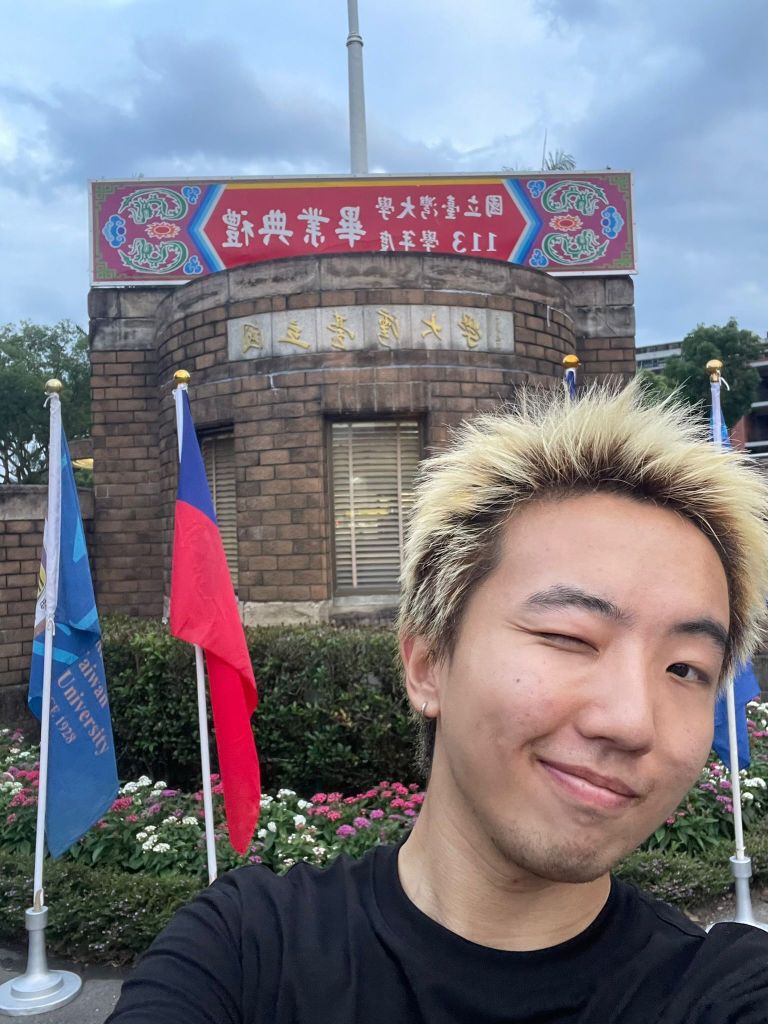
In Taiwan, Yang focused on research regarding Zhao Puchu, the president of the Buddhist Association of China after the Cultural Revolution. “Personally, I would say he is the most important religious leader after the Revolution,” Yang states. He explains that Zhao contributed greatly to the revival of Buddhism in China and survived the Cultural Revolution when many other religious leaders did not. In particular, Yang focused on narratives about the figure other than those predominant in English-language scholarship.
As a Chinese researcher, Yang says that his position is unique. He used to think that those in the West should learn more about China, because he is “proud of [his] culture and [his] nation”. However, now, he has changed his attitude. “I don’t have the responsibility to educate everyone. […] Those in the West are only a really small amount of people in the world. […] I will still use a post-colonial approach to approach my topic; I won’t be focusing on educating specific demographics,” he says.
At Harvard, the high-achiever is planning on continuing the research he has done as part of his capstone. “I feel like subaltern studies in Buddhism is not yet a topic that is fully problematised. There has been a lot of judgment on Chinese religious policy. I don’t mean to say if it’s correct or not, I just feel like I need another way [to examine the issue]. The available literature hasn’t provided me with this alternative way, […] and I want to look at it from my own grounded research,” he explains.
Quickly moving on to another interest, Yang is also thinking of furthering his interest in “quantum physics and topology” at Harvard. “Harvard has a good relationship with MIT, so I might take some math courses there,” Yang smiles. He credits this interest to AUC lecturer Kat Newell. “She’s a great person, very understanding and patient. […] I took two courses on physics at AUC, and they were fantastic.”
Surprisingly, Yang may not pursue a PhD after Harvard. He shares that his time in Cape Town has influenced his thinking on it, making him “think of the limits of the humanities”. He explains the homelessness crisis in the city, and that he’s made friends with some homeless people. “I listen to their stories and try to think of a way to help them get out of their situations, but I feel like it’s very difficult. […] I feel like I need a more realistic approach to the what and who I care about. And that might not look like a PhD.”
As for advice the student would give to AUC students? “Try to make decisions that are different from most of the people you know. […] Listen to people you admire, maybe a lecturer. Someone you want to be when you’re their age, “ he says. “Also, when you experience unfairness, make yourself more powerful, in a way that you feel more fulfilled and more peaceful. […] All my experiences as a result of discrimination have all built me up […] and made me a more resilient and compassionate person.”
Yang would also like to thank the following AUC lecturers who have inspired him along the way and contributed to his achievements: Dawn Skorczewski, Alexandra Brown, Lara Mazurski, and Anco Lankreijer.
 The Herring