
By Younes Saramifar
Opinion
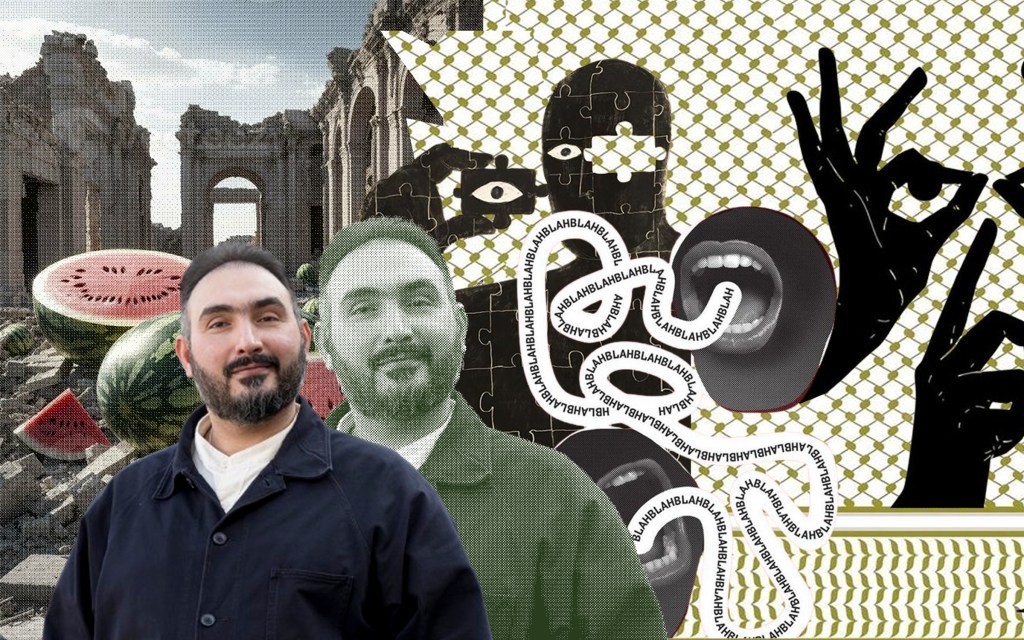
The Death of Critical Thinking
The onslaught of inhumanities and systematic killing of Palestinians has exposed the hypocrisy embedded in some of Global North higher education institutions once again. They seemingly strive for values like academic freedom, social justice, diversity and excellence, and critical thinking. However, their commitments to these values peter out when the lives of those not made from Whiteness are rendered disposable. For instance, Columbia University cancelled Palestine-focused events; Harvard Law Review squashed a critical piece on Zionist violation of international law; Oberlin College, a politically active American college, opted for ‘neutrality’ despite its profile boasting histories of protest against the Vietnam War and student activism.
Some columnists of Times Higher Education explicitly encourage educational institutions to embrace neutrality. In the same vein, some Dutch higher education institutions, such as Vrije Universiteit Amsterdam and Amsterdam University College, have appreciatively adopted neutrality and depoliticisation of the onslaught. VU cancelled the teach-in ‘Gaza in Context’ by imposing cumbersome surveillance conditions and rules. AUC’s management announced via Canvas that AUC is the “neutral place of knowledge production.”
The wording of AUC management’s announcement is misleading. It combines neutrality and critical thinking to gloss over its reductive approach to higher education. Combining neutrality and critical thinking means decontextualised theorisation, socially and politically irresponsible knowledge production, and conducting science without any attention to planetary conditions. Neutral critical thinking (if such an oxymoron could exist!) is another step toward Whitewashing students. It encourages scientific personhood, analytical identity and intellectual faculty to become devoid of emotions, political passions, dissent and criticality. In other words, AUC’s announcements (22 November 2023 & 1 December 2023) and activating the AUC Decentral Crisis Team (DCT) declare that students and staff, by extension, should think but not feel. They are asked to obey institutional ‘reasons’ and codes of conduct without disrupting misguided, biassed institutional neutrality.
The onslaught of inhumanities against Palestinians and current reactions by and in AUC are examples of the death of critical thinking in higher education. First, critical thinking is put to its death when institutional managers ignore neutrality itself as a value judgement. It is a value judgement that promotes neoliberal capitalist extractive individualism. Neutrality protects the status quo, and it distorts and Whitewashes ‘diversity’ into a protective shield for the empowered and privileged. Setting such a value judgement — neutrality — as the institutional norm is the gradual normalisation of inhumanities and acceptance of settler colonialism and systematic killing of anyone who is not made of Whiteness. Second, some discussions in current protests, sit-ins, petition signings, and empathic political expressions in AUC operate through decontextualised solidarity, and they lack reflexivity. So, I write this text as an invitation to grieve the death of critical thinking due to the simultaneous neutrality and lack of reflexivity I am witnessing.
Neutrality and Critical Thinking
AUC management is not the only misguided Dutch institution encouraging neutrality amidst the onslaught of inhumanities. Ibn Firnas, the Muslim Student Association of TU Delft, appealed to the university executive board to maintain neutrality and not “engage in non-Dutch, non-European politics”. Such approaches disengage higher education from the human condition by promoting apathy among students via institutional neutrality.
Neutrality decouples science and society, depoliticises higher education, and neglects histories of Critical Theory and Intersectional Feminist Theories. Critical Theory, one of the most powerful instruments of Social Sciences and Humanities, emerged from science as activism and vice versa. For instance, Max Horkheimer and Theodor Adorno, amongst other Jewish intellectuals, promoted Critical Theory in response to social theory’s neutrality and depoliticisation of science by Nazis. Robert Proctor writes, “Nazis depoliticised science by destroying the possibility of political debate and controversy”, and neutrality in knowledge production was the core of the depoliticisation of systematic killing.
Neutrality distorts the truth of the onslaught of inhumanities and gives a chance for the privileged to decline their political responsibility and care for the dispossessed and oppressed ones, such as Palestinians. The call for neutrality amid the onslaught of inhumanities against Palestinians exposes how Dutch higher education institutions, such as the VU and AUC, have forgotten that ‘never again’ is a planetary message, and it is not only about the Nazis’ systematic murder of Jewish people, Romas, and otherwise abled bodies and homosexuals.
Angela Davis aptly said, “Palestine is a moral litmus test for the world”, and neutral places of knowledge production fail this test miserably. VU and AUC management would do well to remember ‘First they came’, the confessional poem by Martin Niemöller (1892–1984). Here, I rephrase it differently: They came for Palestinians, and you suppressed critical thinking because you are not Palestinian. They will come for you, and no one will speak for you because you put critical thinking to its death. Considering the result of the recent Dutch election and the hostile environment against international students and teaching in English, they will come for you, AUC, and what will AUC be without its international students and staff who add “diversity” to its “excellence”?
Lack of Reflexivity
The White woman from the Racially superior position turned her face with absolute contempt towards me, saying, “I don’t have patience for you if you don’t sign the petition.” A mild threat and an explicit demand for solidarity were embedded in her words as if I, a Middle Eastern male-passing academic, am obliged to sign the petition supporting AUC students’ sit-ins. This example, among many others, makes me wonder about the lack of reflexivity and critical thinking in some recent expressions of solidarity in and around AUC.
Sit-ins and organised actions about Palestine in a plural environment such as AUC and VU are shaped by power dynamics informed by Race, migration status, and labour contracts. Hence, reflexivity is needed to uphold solidarity. Here, reflexivity means exercising strategic engagement and organising with care so that Racial, Racialised, and gendered minorities can find the space to develop protective mechanisms in consort with the group. During the recent sit-ins and mobilisations, I have noticed that some academic and student activists from Racially superior positions holding superior citizenships play the White saviour game, which disables critical thinking in solidarity. For instance, I was surprised that some (privileged) students expected me and my Racialised co-teachers to speak up about the current onslaught without considering the academic precarity of Racialised junior teachers in my team.
Although, I have also received wonderful and heart-warming politically sensitive emails from AUC students. They acknowledged how academic precarity influences some teachers’ freedom of expression due to institutional tyranny. Those who demand solidarity with no reflexivity, have no patience for minorities, or don’t consider the power dynamics within petition signing decontextualise solidarity and incapacitate critical thinking. They simply have not realised that Palestine is not only a territorial dispute that some White saviours cry over. Palestine is a reminder of human conditions that cannot be reconfigured without reflexivity.
Grieving for Critical Thinking
Most of the recent solidarities are seemingly about Palestinians, but they actually are assemblies to grieve the death of critical thinking and academic freedom. On the one hand, neutrality has become a tool to suppress academic staff and tame students by asking them to be critical without living, practising and embodying critical thoughts. On the other hand, the expressed solidarities are not thoroughly reflexive and don’t pay attention to power dynamics, precarities and representational complexities.
Furthermore, neoliberal higher education institutions such as AUC are deceptive. They absorb criticism and redirect protests and dissent to save face. They manage and control critical thinking by organising lecture series’ and sponsored events to “provide students with a deeper understanding of the complex issues”. They do not respect the representational space for students and staff to freely voice critical thoughts and solidarity within the educational and pedagogic environment. In other words, education and pedagogy have become tools of the very oppression that critical thoughts are intended to target and dismantle.
I am a pessimist and remain hopeless about any change and betterment. We are too weak, fractured, and disunited to do anything to shake up the military-industrial complex or push for a permanent ceasefire. However, all lives lost and all Palestinians systematically murdered are not in vain if privileged students of AUC and budding privileged teachers, those occasionally outsourced to AUC, contextualise and reflexively express solidarity. The contextualised solidarity and understanding of the true meaning of “Palestine from the River to the Sea” are the counternarratives and activism against neutrality and oppressive structure that imbibe the shrinking space of critical thinking day by day.
Editor’s Note: This article is a guest contribution by Dr. Dr. Younes Saramifar. He has been a lecturer at AUC since 2017.
 The Herring
This is an excellent example of leftist infighting. Dr Saramifar is actively disarming the leftist academic movement that is trying to create a voice of resistance against the onslaught that is happening at the moment in Palestine. By playing the victim card here, he discredits the Palestinian movement. Dr Saramifar probably thought: How can I make a genocide something about me rather than support the voices that are being raised to halt said genocide? Luckily for him, he gets to write this post as he gains publicity over the dead bodies of my Palestinian brothers. Shame on you.
LikeLike
LikeLike
As eloquent as your argument is written… you imply Israel may head in a similar direction as nazi Germany. Hence you invoke never again. This perspective is not helpful within a context of antisemitism and fears it causes. Why is never again or anti nazi language hardly mentioned in contexts of other wars? Because its meant to be toxic towards Jews.
LikeLike