
By Lou Boot
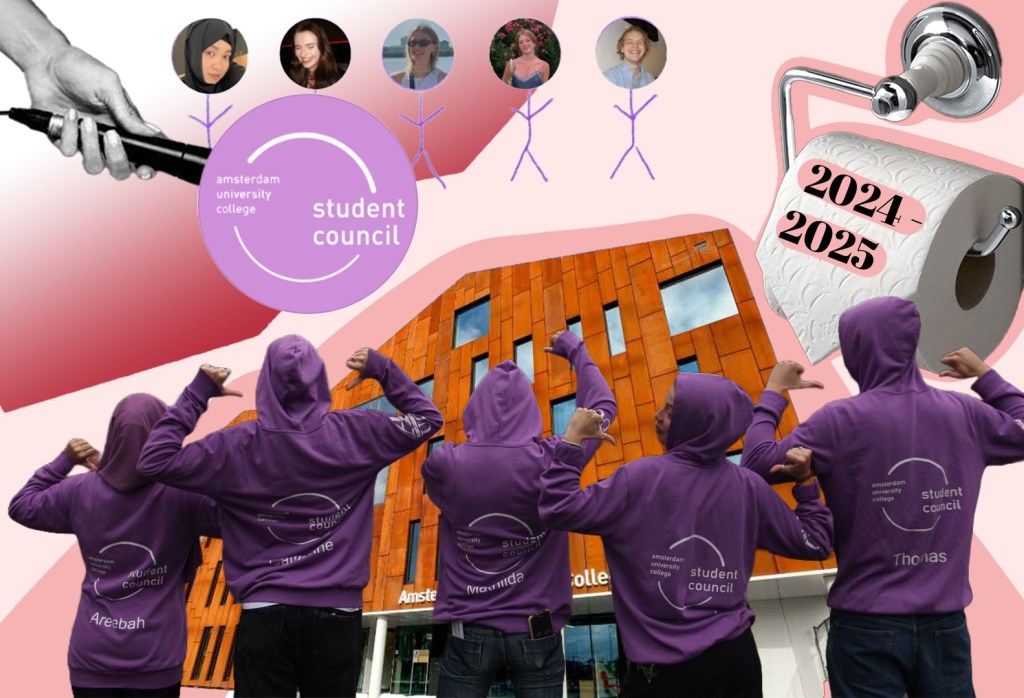
As the new academic year starts, AUC’s Student Council (StuCo) has compiled a plan for 2024-25 of what they would like to achieve for the student body. Their strategies involve a focus on transparency, diversity, academics, mental health and well-being, safety, graduate students, and internal collaboration. Through an interview with StuCo’s co-chair Mathilda Gustafsson, a third-year Humanities student, more questions were asked for further insight on the plan. This year’s policy agenda seeks not only to empower students but also to bridge the gaps in communication and policy implementation that have been a challenge in the past.
What is the Student Council and how does the Policy Plan work?
AUC’s StuCo is the official body of representatives for the students. They regularly go into discussion with AUC Management and the Dean to accurately communicate the needs and demands of the student body. The Policy Plan lays out what they would like to achieve this year.
Gustafsson explains that within the Policy Plan there are currently no policies with greater priority than others, but StuCo will soon figure that out as the year continues and problems are called forth by students. While currently there is no absolute priority, they will pursue transparency first: “Our first initiative is to make ourselves known to the first years and to be transparent about the things that we’re able to do for them,” Gustafsson says.
She also explains that StuCo runs on a horizontal philosophy where all decisions have to be made unanimously, and some members of StuCo are more qualified to pursue certain pillars over others, which means “even as Chair, I am not the most qualified to speak on behalf of my other council members.”
Visibility and Transparency
StuCo has added an emphasis this year on transparency on the side of AUC towards its students. They would like to achieve this by continuing past projects: “Voices of AUC,” where panels are used to hear the student body, open assemblies to gather input and revise their policies if necessary, and “Toilet-Paper Newsletter,” where news, surveys, events, and more from StuCo will be posted.
Some new efforts for transparency include a bigger emphasis on StuCo’s social media. One of the aims is to emphasise that students can also attend consultation meetings with the Dean which are published on Canvas. They would also like to hold office hours twice a week on Mondays and Fridays during lunch where students can receive academic, IT or mental-health support. Office hours could also be used to give feedback, but if students are uncomfortable being a known individual they can remain anonymous by submitting notes in “Da Box,” which is a box in the AB where people can write suggestions, questions or concerns into slips of paper.
Gustafsson emphasises the importance of gathering this intel, stating that since they have a revision cycle halfway through the year, they can implement these ideas then: “We wanted to allow them [students] a space to influence what it is we aim to achieve throughout this year.”
Accommodation
This year, StuCo added the “Accommodation” pillar to raise awareness on those who need accommodations for various reasons. With the help of student Pauline Lütticke and AUC professor Dr. Anne de Graaf, they are working on policies to improve accessibility. This includes institutionalising the Disability Handbook started by student Lisa Dondainas, which provides resources for students and staff on accommodations. By institutionalising it, StuCo would like to mandate it.
They also will be keeping an eye on any changes made by, as the Policy plan states, “UvA house rules, Social Code of Conduct, Board of Examiners rules and regulations, and the Academic Standards and Procedures” to ensure their values stay the same as the student body’s.
On top of that, using the Framework and Action Plan for Diversity, Equity and Inclusion (FAPDEI) they can set standards for diversity and inclusion at AUC.
Diversity
StuCo aims to continue projects aimed towards a respect for the diversity of AUC, such as to keep working on the Disability Handbook with The Diversity Commission (DivCom), which helps promote inclusivity and diversity at AUC. StuCo also plans to keep trying to have workshops with the staff at AUC to make their classes more accessible. Gustafsson further explains that to measure the efficacy of these workshops, they have planned to invite specialists from TACT, a training and advice service, whereafter the collection of student input through various methods will be used to decide how effective the training has been.
Other efforts include contacting specific student groups when evaluating a certain course, workshops during the year aimed at encouraging respect for different communities, culturally displaying decorations at the AB for different festivals of cultures, and a diversity in academia where, as the Policy Plan states, AUC would have to show different authors and perspectives “not just as a section of the curriculum for token diversity.”
Academics
StuCo would like to work on the Academic Standards and Procedures to include holidays from other cultures than just Dutch holidays into the attendance policy. Mandatory courses are also aimed at being more manageable to plan for students, including making the process for students to be exempt from certain mandatory courses easier and creating a clear grading rubric for the classes. Making off-campus courses more available and reinstating Humanities courses is another effort from StuCo into course planning.
Gustafsson explains that this has been a general concern for a long time: “Having courses reappear and then be removed from the curriculum creates a sort of instability in terms of curating your major for a certain academic career or your bachelor or aspiring towards a certain major.”
Four wider initiatives that StuCo wants to achieve in academics are, first, a tutoring system at AUC for students by students, secondly an official establishment of classroom breaks, thirdly a mandatory requirement for teachers to include office hours and general contact information in their email signature, and lastly book fairs to be able to buy copies of books for cheaper.
Mental Health and Well-Being
Through weekly meetings, StuCo would like to continue collaborating with the Well-Being Team from AUC, and to ensure that students are well-informed of the value that Student Life Officers (SLOs), AUC’s mental-health support team, can offer to them. They are also advocating for an AUC psychologist or improving the referral system to UvA psychologists. They would also like to add another section named the Consent Board, which is still in the process of being developed.
While accommodations have been discussed before, here they elaborate on their goals of creating simpler processes for accommodations, instead of waiting a month for a response from the Board of Examiners (BoE). This also includes a more flexible attendance policy for students’ mental and physical well being.
StuCo would also like to run mental health campaigns and workshops with Peer Support, an AUC student-run committee to have peers support peers. StuCo also wants an implementation of healthy and nutritious meals through more affordable and diverse options, such as for religious needs (Halal) or other dietary restrictions. Having the canteen import less food and make more use of the kitchen is also a goal.
Safety and Medical Aid
StuCo is planning for medical aid to be at every event, as they explain in the policy plan “no matter how big or small,” which would include someone who is trained in first aid to be there at all times. Gustaffson explains that while “AUCSA already receives training in first-aid, it would make sense for the Student Council to also be qualified as such.”
Emergency drills are also part of their safety plan to be better prepared in case of emergency. Training would also be required for AUC teachers for emergencies and First Aid.
Incoming and Outgoing Graduates
For incoming graduate students, StuCo wants them to receive a better idea of what it is like to live at AUC and in Amsterdam for different communities, such as non-EU students or those from different religions, through promotional material and informational sessions.
For outgoing graduate students, career panels are used to help explore paths for students after graduation. In collaboration with the Alumni Committee, StuCo believes they could help give guidance, networking opportunities, and insight on various fields by creating connections with professionals.
Internal Collaboration
StuCo would like to keep collaborating with different teams to achieve things they are unable to do themselves. This includes a monthly meeting named “The Sounding Board” with AUCSA, AUC’s Student Association which helps all committees run together, and Peer Support, where they all discuss possible collaborations. Separate meetings with AUCSA will be held to talk about AUC and the dorms. The Board of Studies is also mentioned as a body that they would like to keep speaking with for the voices of students.
StuCo mentions the Student Staff Platform (SSP), which was established after Pro-Palestine protests took place at AUC, is another body they will keep working with to foster open dialogue within AUC, and keep connecting students and staff. StuCo explains in the Policy Plan they will “ensure that dialogue is translated into tangible action that reflect the diverse needs of the wider AUC community.”
When asked about the Pro-Palestinian protests that occurred last year and if there were any policies in place to address concerns from students, Gustafsson explained that as StuCo, their job is to give students a platform to raise any and all concerns, so it would be very difficult to implement policies to monitor or manage protests occuring on and outside campus. However, she did mention that the SSP is that step for fostering dialogue between students.
Closing remarks
While this is the policy plan for the rest of the academic year, it is of note, as stated multiple times in each section, that the plan is subject to change depending on what the student body determines necessary. As Gustafsson stated: “Obviously it’s very ambitious. [The Policy Plan] will be revised. We aim to organise a “Voices of AUC” in [late] October.”
Still curious about the policy plan or want to see more details? Check it out on AUCSC.nl.
 The Herring