
Federica Nuccetelli
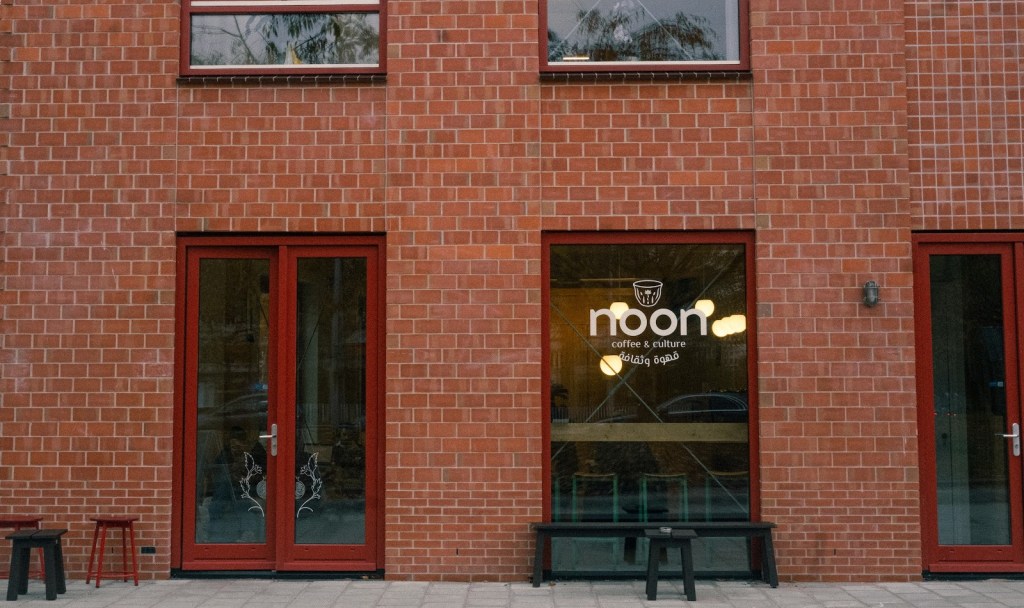
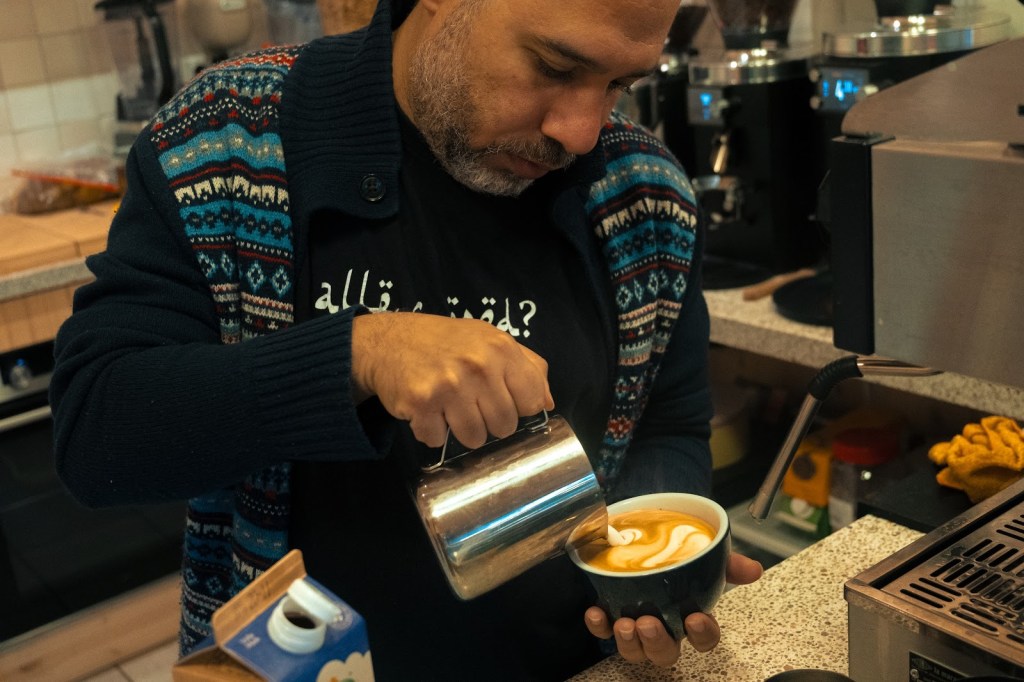
In the outermost corner of a red building, found after the stairs leading to the infamous Science Park sprinter station, is a charming shop: on the front, a sign reads “noon coffee & culture”. Loved and regularly visited by many at AUC since its arrival with the new academic year, the Herring decided to investigate what the charm was all about. We interviewed Sohbi Khatib, one of the three co-founders of Noon, who was generous enough to chat with us and answer all of our burning questions.
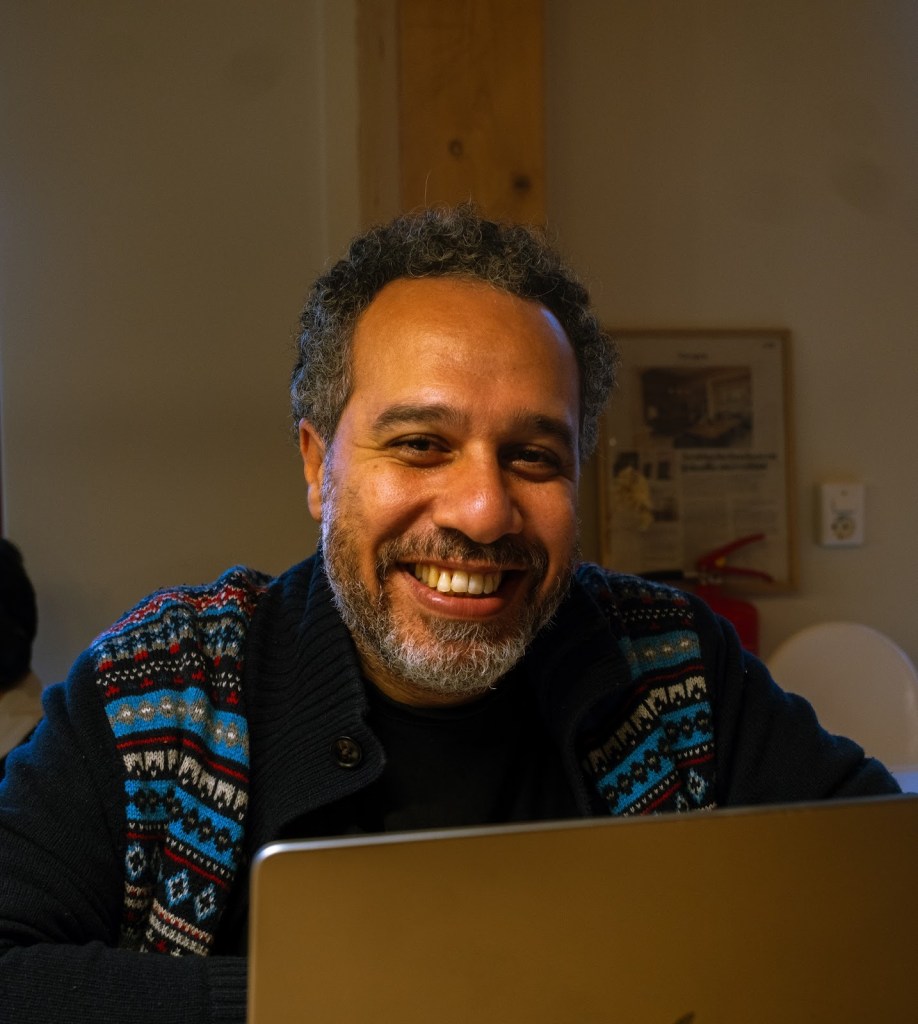
Though the beloved bookshop-café opened at the end of July, Khatib had been dreaming of creating a space like Noon for almost a decade. Three years into his move to the Netherlands, he started thinking of founding an Arabic bookshop, but realised “it would not even pay the rent”. Undeterred by this redirection, Khatib has been working in many fields ever since, dedicating his time to journalism, storytelling, and human rights work. However, when he heard that Kruislaan 259A was looking for someone to operate a café, he took the chance.
This project has felt different from his past, he told us. Now anchored to a physical space and with an ever-increasing number of details to deal with, balancing Noon with his other projects has not been easy. He credits his business partners, Anouk van Nuland and Nasim Al-Homsi, for the creation of Noon as it is today. In fact, though he has been a passionate lover of coffee for years (even going so far as to use his sabbatical to “taste coffee as a customer”), his partners’ experience in operating cafés has been crucial. Their cooperation has allowed Noon to become a space serving both “morning beans” and “evening beans”: a special café and cultural meeting spot.
When asked about his missions for Noon, he detailed three. First, to create a place for lovers of the Levant (a portion of the Middle East, including Palestine, Israel, Jordan, Lebanon, and Syria), interested in exploring its culinary and literary tastes. Second, to build a meeting point for those who miss home, and are looking for a second one; a feeling which he relates to personally, having emigrated from his home in Palestine many years ago. And finally, to create a bustling cultural hub, habitually visited by those with some free time or on a night off.
First Mission: The Tastes of the Levant
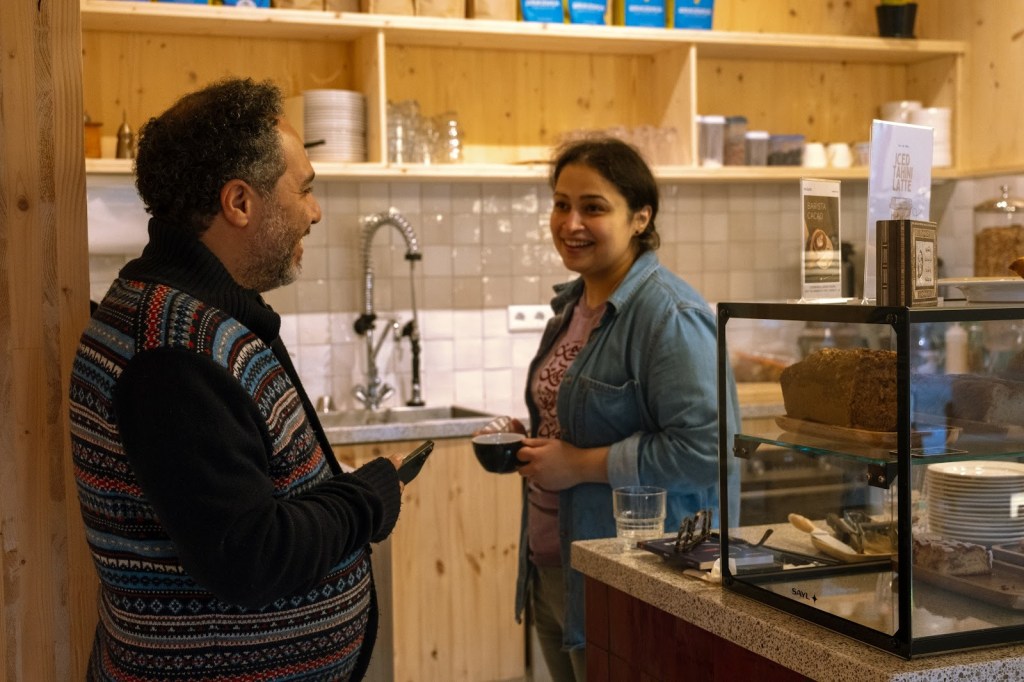
Khatib highlighted that Noon is “all about experimentation”, blending Middle Eastern tastes with Dutch traditions, as seen with the Za’atar Toastie (Za’atar being a herbal mix native to the Levant, containing herbs such as origano, thyme and cumin). His favourite option on the menu, the Noon Glow Smoothie (a mix of dates, pecan nuts, bananas, and milk), is a reminder of the flavours of home.
He also had the patience to walk us through the organisation of his book collection. In Arabic, you can find novels and poems, as well as works of non-fiction relating to literary topics. In English and Dutch, Noon offers works of fiction translated from the Arabic and non-fiction books on the Levant as a whole: from cookbooks to essays on politics, economy, and history of the region.
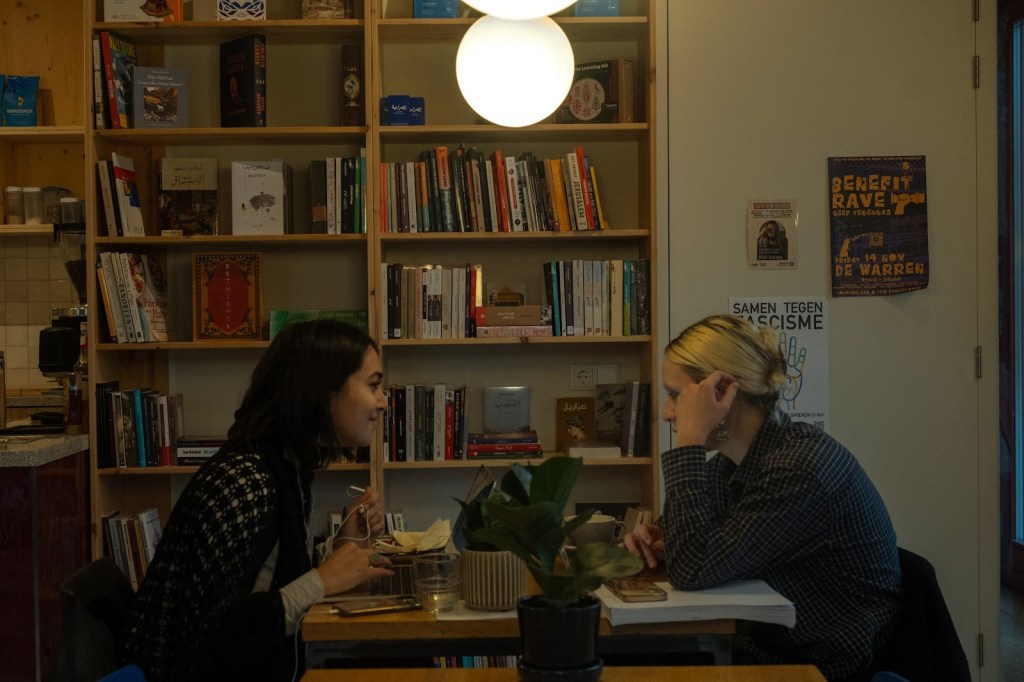
When it comes to book selection, he stressed that he feels the need to promote books that have “a question mark around them”. Whether officially banned or institutionally shadowed, he deems it necessary to create a space to honour these books. He particularly wishes to honour their authors, who have often suffered grave injustices for their self-expression: as Khatib stated, “If you, as an author, have paid a price so high, the minimum [we can do] is to give you the stage”.
On this note, he recommended two books from the collection, which have been banned due to their bold and controversial topics: Mohammed Choukri’s autobiography, For Bread Alone, and Ahmed Naji’s novel, Using Life. The former was first translated and published in French, and only appeared in Arabic twenty years later. Its raw representation of social decay (tackling topics such as poverty, violence and homosexual experiences) caused such a scandal that it was, and still is, banned in most Middle Eastern countries. The latter novel’s author, Ahmed Naji, was sentenced to two years of imprisonment on grounds of “violating public modesty”, after depicting drug use and sexually explicit content in his work. In an entirely unexpected and unconstitutional way, his self expression cost him his freedom.
His love for books was evident as he detailed the adventures he has undertaken to bring Arabic books to the Netherlands. These often involve filling 25 to 46 kilos worth of luggage with novels and other literary works when coming back from trips to Egypt and Lebanon (the range depending on how much the airline will allow him to carry). He has found this solution to be easier than organising international shipments, which makes the business less profitable and sustainable.
Second and Third missions: Creation of a cultural hub, and a home away from home
Khatib continued by revealing a personal motto which has deeply influenced all of his projects: “if you can’t find it, found it”. Noon was born out of his proactive determination and his desire to create inclusive, welcoming spaces that would foster community; his desire to build second homes, where “you can find your people, your energy, your vibe”; his desire to create “spaces that are missing”, where some can experience another culture, and others can feel seen and understood without the need for an explanation.
This philosophy is reflected in the events Noon hosts, such as Arabic-speaking events, as well as closed events for Palestinian people to “meet, talk and discuss, without the need to explain to others who you are or what you are passing”. Though he profoundly values accessibility, he feels “there are so many other events in Dutch and English, so [he is] glad there will be a space for people who want to speak Arabic”.
Previous work and educational experiences, he mentions, have shaped the creation of Noon in both conscious and unconscious ways: his political engagement pushed him to boycott platforms such as Spotify and Wix, as well as promote Palestine Cola (which you can always find on the front counter). There is also a sense of pride that comes with being a part of Kruislaan 259A, which belongs to a cooperation standing for values very dear to his heart (such as decolonialism, anti-zionism, and inclusivity).
Interestingly enough, all of these values are ingrained within the shop’s name. In fact, as Khatib informed us, “Noon” is an Arabic letter with many meanings: it is a way to talk about community, and to indicate the ‘us’; it is also the ocean, both literally and metaphorically, a place “full of variety, where everything ties together”. The Arabic letter also has a cup-like shape, making it the perfect fit for this bookshop-café.
As our lovely discussion came to an end, Khatib emphasised how he hopes to develop Noon’s literary side in the future. Though many regulars currently use the space to study or work, he states that he would love to see more people reading. With Noon, he hopes to give people a space to detach from the constant buzz of today’s world.
“Now, we live in a very practical world where everything has to be efficient,” he told us. “You read because you have a paper, you study because you have an exam.” He continued: “I cannot live with this world, I love a world where things don’t have a reason.” He confessed to missing a time when looking at the horizon for hours and rereading paragraphs endlessly used to be ordinary.
As we’ll never be able to achieve the feeling of omnipotence we strive for (to know about and to live through every experience), Khatib promotes living life at a slower pace instead. Noon can be a good place for that: taking a moment to disconnect and truly reflect on the things we care about the most.
 The Herring