
By Elea Jürß and Garvan Ó Deaghaidh
“There were a lot of women and children yelling to me, Oh, he’s back, he’s back!” says Erik.
Every November, something magical happens in Amsterdam. On a typical rainy morning, we set out on the streets to investigate it.
Leaving AUC behind, we cycle past Oosterpark, through De Pijp, Oud-Zuid and all the way to Amsterdam Centraal. Along the way, we find our answers.
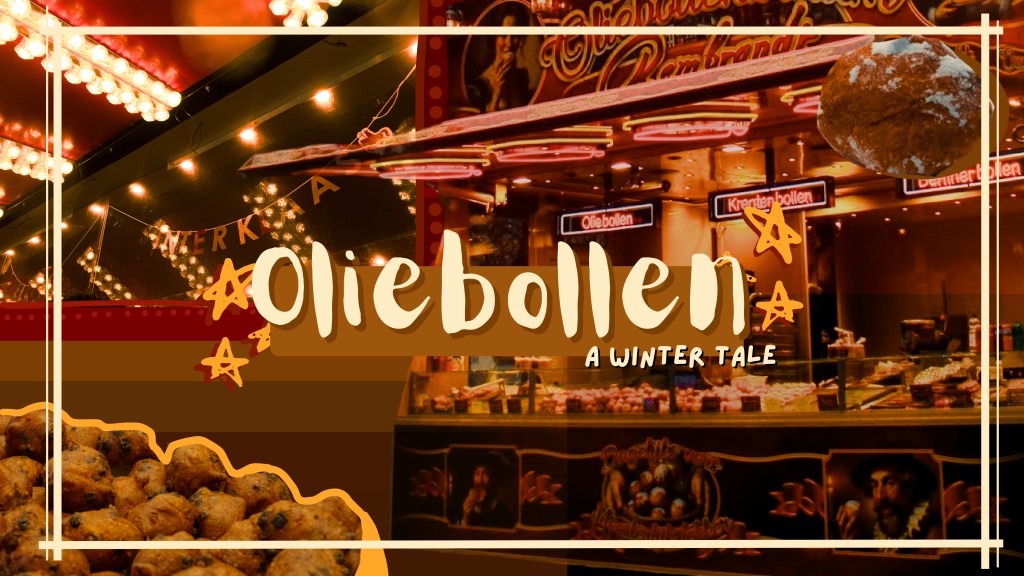
Oliebollen: A piece of fried dough, topped with powdered sugar, best served warm. This Dutch winter treat first appeared in the 15th century and is traditionally eaten on New Year’s Eve. The stands return home every winter, after spending the warmer months in fairs around the country.
Cycling through the neighbourhoods, a sweet smell guides us to the “Oliebollenkram”. The stands’ warm lighting contrasts against the morning gloom, drawing in people from the surrounding areas. Customers huddle under the awning, avoiding the rain and cradling their freshly baked olliebollen. As Lili takes orders and hands out olliebollen, Erik recounts their history as owners of the shop. He and Lilli have been coming to this exact spot for the last 8 years. Erik’s family has been in the oliebollen business for five generations. He remembers his stand’s return to the corner of Wibaustraat and Osterparkstraat and the joyful reaction of the community.
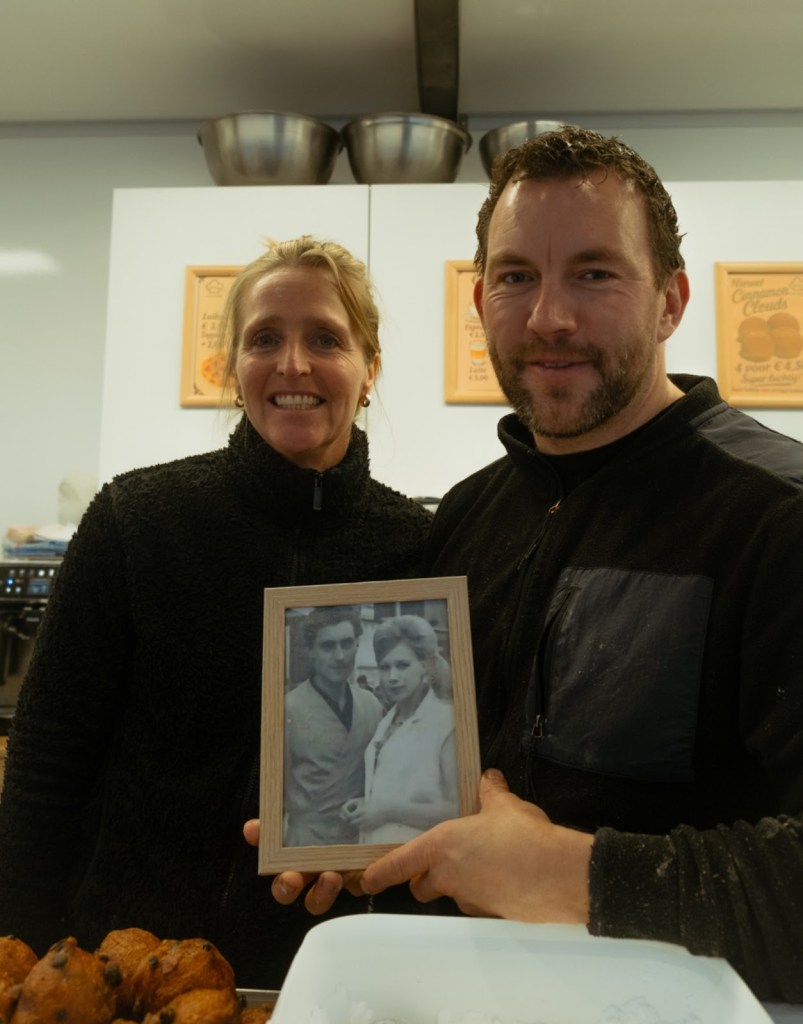
Leaving Amsterdam-Zuid behind us, we are stopped by a line of people leading up to Marie-Heinkenplein. Amidst a square of bars and cafes, sits Chantal and Eddie Geistefer’s Olliebollenkram. Eddie’s third great-grandparents first started the business when they were nineteen, selling Oliebollen alongside peanuts and almonds at local fairs.
Their two daughters work there with them. Chantal hopes that they will take over the stand one day. However, she’s not planning on leaving anytime soon. Even though she never imagined herself selling oliebollen, she greatly enjoys her work. “Every day is a nice day because every day you get to talk to happy people,” Chantal comments.
Their stand is one of many people can encounter on their journey through the city. Chantal explains how every oliebollen seller is a part of the same community, working to supply oliebollen to the people. Being the best stand is not the goal. “Everybody has their own recipe and speciality. It isn’t possible to bake for everyone, so it is like everybody [the oliebollen sellers] is family to each other,” Chantal says.

In their “Oliebollenkram”, they have front row seats to the development of the neighbourhood: “Some people you saw as children, and now they come with their own children,” Chantal says. Erik has had a similar experience; he remembers how unpopular the area used to be. “Now you see more schools, more offices, and better houses. There is a better audience. They are all very nice people living here.”
Our next stop was Gebakkram, another popular destination for oliebollen lovers. One of four locations in Amsterdam can be found in Oud-Zuid at the corner of Postjeweg and Barsjeweg. Jo, one of the owners, has become used to seeing the same faces there. He comes from a long line of oliebollen sellers who established their business in Amsterdam in the early 20th century. His father taught him how to prepare the treats at just eight years old. “I’ve been standing here for 50 years, and so you know the neighbourhood, you know all the customers who come every year,” Jo says.
Jo regrets how expensive oliebollen have become over his time in the business. “I wish the production costs were lower, so we could offer everything for cheaper, but every year everything goes up,” Jo says. Oliebollen tend to cost around 1.50 €, but the further we went into the city, the higher the prices were.
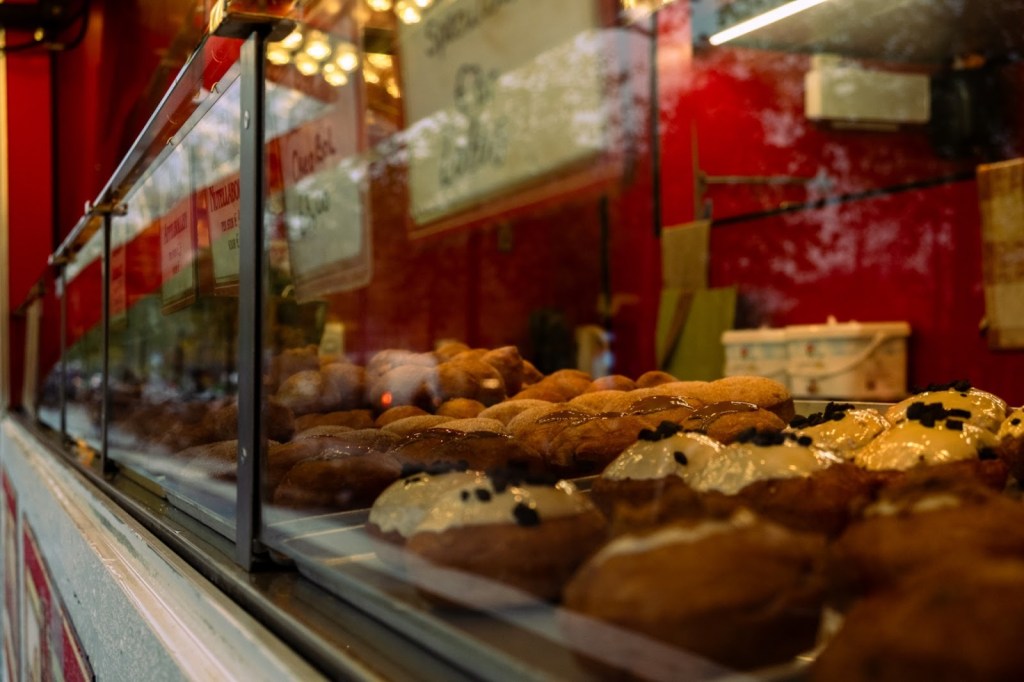
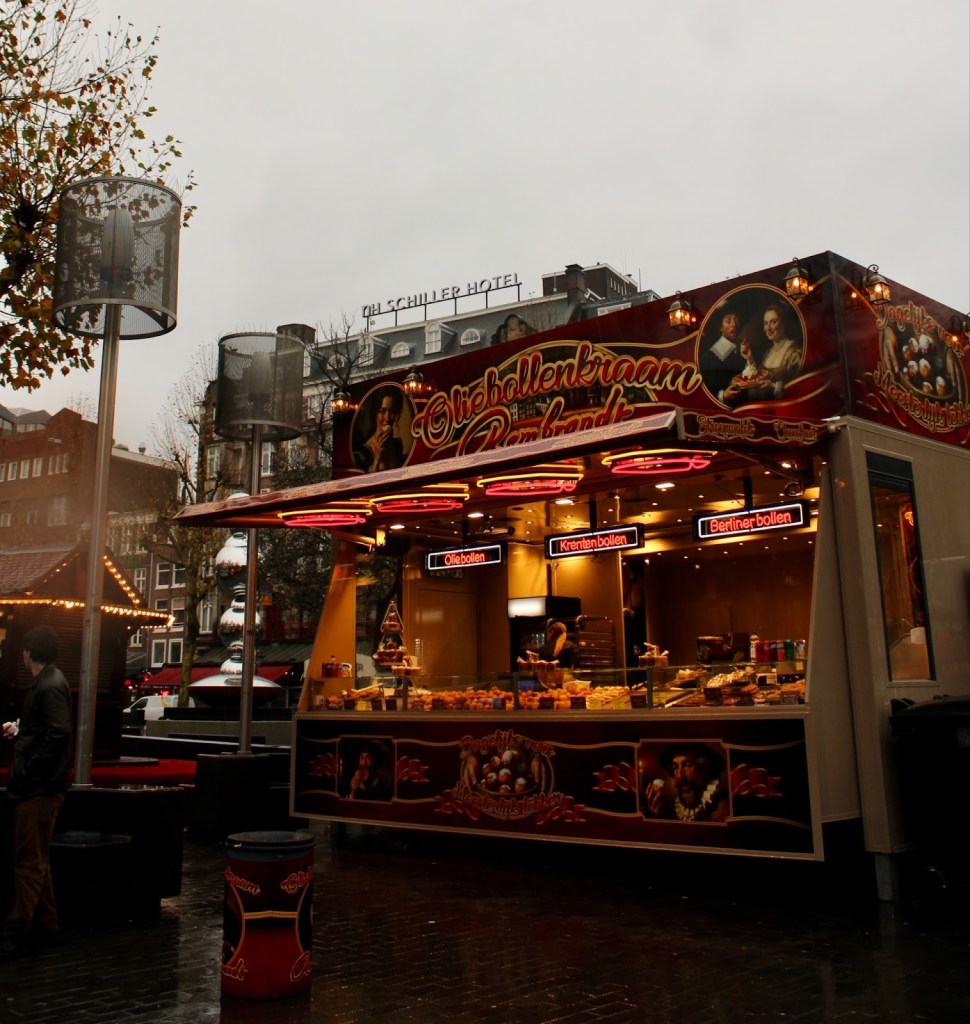
Continuing on our journey, we end up at the Christmas market on Rembrandtplein. Between stalls selling food, souvenirs, and jewellery, we find an Olliebollenkram and another opportunity to taste this delicacy. There, we encounter Isabella, a staff member who tells us how her work reminds her of her younger self. “They [oliebollen] were a big part of Christmas and New Year’s, I think my childhood self would be happy that I am working with them.”
Oliebollen represent a shared childhood experience for many Dutch people. Magda Uijtenhaak, first-year Humanities student, remembers her own connection to oliebollen. Growing up in the Netherlands, it was a source of childhood nostalgia for her. “They just make me feel cosy and warm.”
Oliebollen bring a sense of community, childhood nostalgia, and connection to Amsterdam. Now that our journey is over, we cycle back to the dorms, cold and soaked, but with the answers we were looking for. By the time this article gets published, there will be one month left of oliebollen in Amsterdam. Soon, the stands will leave, and the sellers will return to their normal lives. Until next year, when the magic returns.
 The Herring