
By Antoni Bańkowski
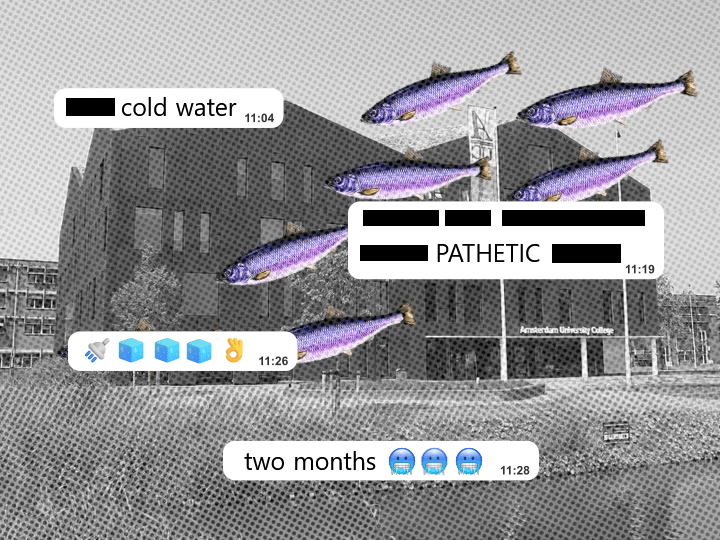
DUWO leaders included me in a group chat about upcoming hot water shortages. I didn’t think it could be real. Then the cold showers started.
The supply of hot water to the middle building has been repeatedly interrupted over the past months. In the morning, residents often flee their rooms in hopes of having a warm shower at their friends’ apartments. Meanwhile, DUWO continues to send out emails reassuring them that the two-month-long heat pump installation process will soon reach its end.
Despite multiple attempts, The Herring reporters failed to get a comment from DUWO on the crisis. We were ready to give up with our reporting on the issue and let the fog of misinformation shroud Carolina MacGillavrylaan. But this was before an account named “DUWO CWA” (CWA stands for Cold Water Advisor) accidentally added me to a Signal group chat called “Cold water PC small group.”
My first reaction was to assume that this was a fake. Not because I did not believe that DUWO has an official Cold Water Advisor, but because of DUWO’s contentious relationship with our journalists. It seemed highly improbable that they were seeking contact with me.
A day later, CWA texted the group: “Team – establishing a group for coordination on Carolina MacGillavrylaan cold water ‘issues’, particularly over the next two months. You should have received a briefing of the CEO’s guidance on the issue this morning.”
At this point, a fascinating policy discussion commenced. One account responded: “Team, I understand why the CEO does not consider fixing the hot water to be a priority. I also think it’s PATHETIC that the residents expect to have constant access to such luxury, so it makes sense to delay the repairs by another two months. But I am not sure the CEO is aware of how inconsistent this is with our message that the dorms are habitable. There is a real risk that the public will not understand why we need two whole months just to make the hot water run again. Maybe we should consider sticking to the original timeline and try to repair it in one month instead?”
This opinion seemed to be unpopular among other group chat members. One of them responded: “A month is definitely not enough time, imagine the rush the teams would be in. And the extended timeline will not make that much of a difference, the residents will not even notice. From a messaging standpoint, I believe it will have absolutely no impact on our public image, as the email campaign will continue throughout the repair period.”
Another account agreed and provided more details on the emails: “The propaganda department came up with the genius idea of shifting the blame for cold showers onto the residents themselves, convincing them that it is their fault that they all shower at the same time of the day. We are prepared to extend the repair time, and if I had a final go or no-go vote, I believe we should.”
These arguments convinced the skeptic, who responded: “If you think we should do it, let’s go. Let’s just make sure our messaging is tight here.”
The team continued to discuss details of the operation, which would apparently involve extending the original repairs timeline by two months, and carefully replacing “anything capable of producing hot water” in the whole building. The arrival of repair teams was planned for 8:00 am the next day, to make sure the water was cut at the time when most students wake up. “I will say a prayer for successfully prolonging the repairs.” CWA wrote. Two people reacted with a shower emoji.
The next day at 8:00 am, I turned on my shower. The water was freezing cold. Maintenance team started to dismantle all heat pumps on the roof.
I went back to the Signal channel. CWA provided the group with an update “The repairs just started. I will contact you in two months regarding further delays.”
“Excellent,” one account wrote. Others reacted with water, ice cube, and shower emojis.
 The Herring