
By Klaudia Sobczyk
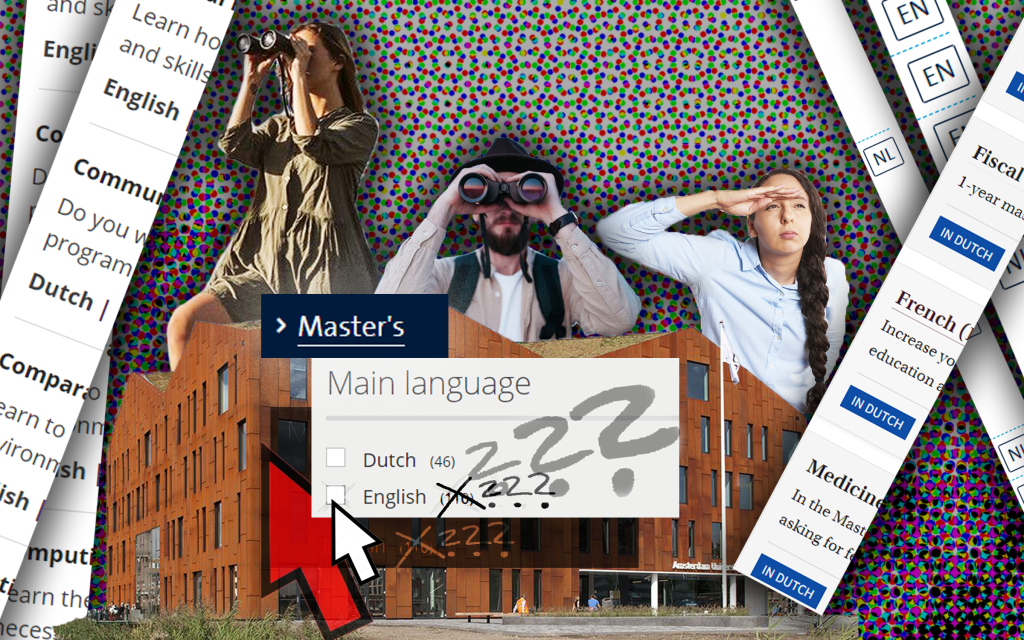
In July 2023, Robbert Dijkgraaf, the outgoing Minister of Education, proposed a new educational bill restricting the English language in higher education, a huge blow to the academic opportunities for non-Dutch-speaking AUC graduates. The bill calls for using Dutch as the primary language in the academic programs, a measure to reduce the number of international students in the Netherlands.
The number of students from abroad has risen rapidly in the recent years. Uncontrolled internationalisation results in “overcrowded lecture halls, overburdened lecturers, lack of accommodations for students and limited access to degree programs,” some of many problems Dijkgraaf enumerates in his letter to the House of Representatives.
The proposed changes will affect a huge part of the AUC students since statistically more than half of the graduates decide to pursue their Master’s programs in the Netherlands. Gerylaine Campos, AUC Alumni and External Relations Officer, says that non-Dutch-speaking graduates might be affected by the reduction of English-language programs while transitioning to Master’s programmes.The availability of English-language education will simply be limited. In addition, students who study medicine or law often need to do a second Bachelor’s degree outside of AUC to fulfil prerequisites for admission. “It is a big topic of conversation within AUC’s management team because the bill will have huge implications potentially also for AUC,” she says.
But the new law would impact not only international students. Domestic students wishing to pursue international education and career will also lose this opportunity. Renske Ubink, second-year Dutch student at AUC, says: “My family and I are mostly negative about it. We get that there are problems like the housing crisis and something has to change. But changing the language? It’s not a solution.” Campos makes a similar point, as she notices that the Dutch-focused academia inherently limits the groups that will be able to study in the Netherlands. “Right now, there’s a labour shortage,” she says, “It doesn’t seem super logical to make it even harder to have highly educated people be able to join.” Ultimately, both the academic world and the market would be disadvantaged.
However, it is too soon to make specific predictions. Asked about whether students should be worried about their future in the Netherlands, Campos says not to be anxious about it yet. Until the new cabinet is formed, the bill is still just a proposal. This process may take several weeks to months after the elections to the House of Representatives on 22 November 2023. Marcus Smit, AUC’s Internationalisation Officer, hints at the possibility that the new changes will only apply to newly-formed programs, not existing ones. Campos mentions that the changes may focus mostly on Bachelor-level programs, as they are the ones facing the greatest overcrowding. The University of Amsterdam (UvA) issued an official statement opposing the proposed law. In a recently released interview with the UvA Board on the subject, Executive Board President Geert ten Dam asserts that despite everything, international students and staff are “immensely important to the UvA.”
This is an article made in collaboration with AUC’s Journalism course of 2023-2024.
 The Herring